
College Station Epoxy Flooring installs metallic epoxy floors across College Station, Texas and the surrounding cities of Bryan, Lake Bryan, Navasota, Caldwell and Hearne, backed by more than 20 years in resinous flooring. A metallic floor is the most decorative system we install and the only one whose finished appearance cannot be predicted exactly before it is poured.
That is the appeal and the risk in one sentence. Metallic pigments move through a clear or tinted epoxy while it is still wet, and the movement is guided rather than controlled, which is what produces the depth and the marbled variation people want. It also means every floor is genuinely unique and none of them can be reproduced.
So we treat a metallic floor as a design decision made in advance, with sample panels, an agreed palette and an agreed level of movement, rather than as something discovered on the day.
How a Metallic Floor Is Built
Base Coat and Color Ground
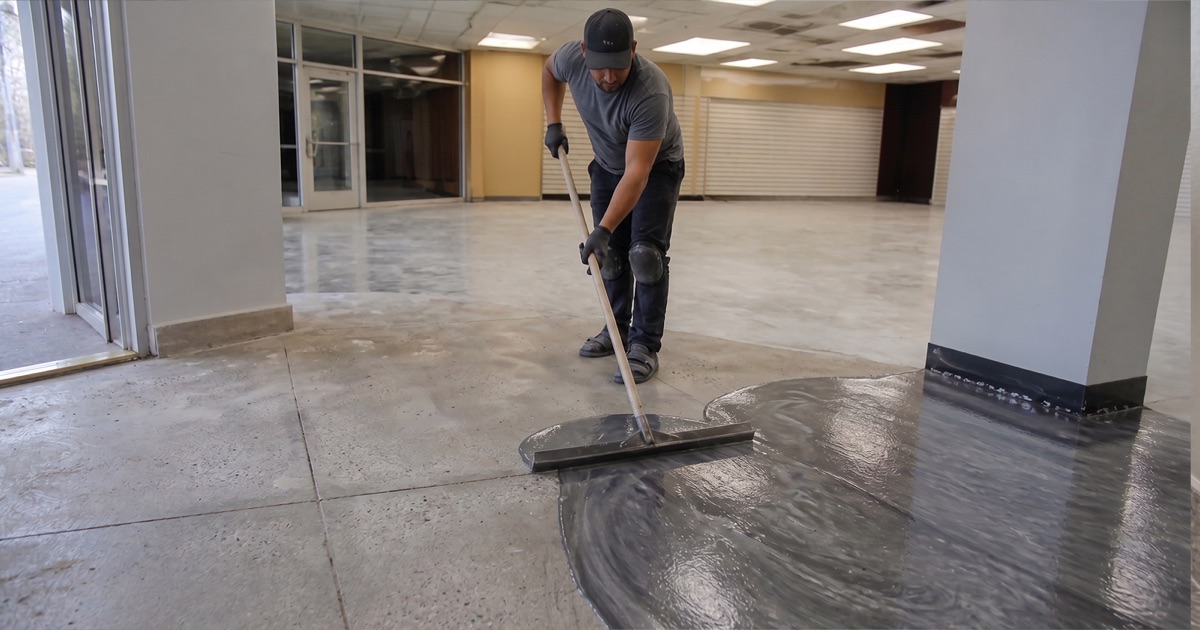
The system starts with a pigmented epoxy base coat, usually a solid color chosen to sit behind the metallic layer and set its overall tone. A dark ground produces depth and contrast; a light ground produces a softer, brighter result. This layer is also doing structural work, bonding the system to the prepared slab, so it is specified for adhesion rather than only for color. A weak base coat under a beautiful metallic layer fails as a system regardless of how the surface looks on handover day.
The Metallic Layer
Metallic pigment is dispersed into a clear or lightly tinted epoxy and applied wet, then worked with rollers, squeegees, brushes, air or solvent to move the pigment into the pattern. The technique decides everything about the finished look, from tight ripples to broad cloudy movement. There is a working window and it is not generous, so a large floor needs enough crew to keep a wet edge across the whole area. Running out of working time halfway across a floor leaves a visible stop line that cannot be blended out afterward.
Topcoat and Protection
A clear topcoat goes over the cured metallic layer to carry the wear, and this is where the floor gets its durability and its gloss level. A polyaspartic topcoat adds ultraviolet stability and abrasion resistance and is what we recommend anywhere daylight reaches the floor. Gloss is a genuine choice, since a high gloss maximizes depth while a satin finish hides scuffing and footprints considerably better. Most clients who choose high gloss from a photograph choose satin after standing on both sample panels.
Getting the Result You Expected
Sample Panels First
We make sample panels in the actual colors before the floor is poured, because a photograph of somebody else’s floor is not a specification. Panels settle the palette, the contrast and how much movement you want, and they give both sides something concrete to agree on. This step removes almost all of the disappointment risk in a metallic install. Panels also make the conversation concrete when more than one person has to agree on the floor.
Movement, Contrast and Scale
The same materials produce very different floors depending on how hard the pigment is worked and at what scale. A small bathroom wants tighter, finer movement, while a large showroom can carry broad sweeping patterns that would overwhelm a small room. Scale is the variable people forget, and it is the one that decides whether a floor reads as elegant or as busy. We work the pattern to the room’s actual dimensions rather than to a technique somebody liked in a video.
What Cannot Be Promised
No two metallic floors are identical, a repair will never be invisible, and the exact pattern cannot be replicated if a section is damaged later. We say this before the job rather than in a warranty document afterward. Anyone promising an exact match to a sample photograph is describing something metallic epoxy does not do. Being clear about that in advance is what keeps a beautiful floor from becoming a dispute.
Where Metallic Works and Where It Does Not
Showrooms, Retail and Living Spaces
Metallic floors suit spaces where appearance is doing commercial work, which means showrooms, salons, retail floors, bars, offices and increasingly residential living areas. In those settings the seamless, reflective surface is the point and traffic is moderate enough that the finish stays looking the way it did on day one. Lighting matters more here than in any other system we install, since the whole effect depends on how light moves across the surface.
Garages and Workshops
A metallic garage floor is achievable and popular, but it wants a hard-wearing topcoat and realistic expectations about tire marking and dropped tools. The reflective finish also shows dust and scratching far more readily than a flake floor does, so it suits a display garage better than a working one. Where a client wants metallic in a genuinely working garage, we specify a tougher topcoat and set expectations about marking.
Where We Recommend Against It
A slab with heavy moisture, an uneven surface that will read through a gloss finish, or a working environment with real chemical exposure is not a good candidate. The high gloss that makes a metallic floor beautiful is also unforgiving of everything underneath it, so we would rather point you at a flake or quartz system than install a floor that highlights a slab’s every flaw. That recommendation costs us the more expensive job and saves the client the more expensive mistake.
- 20+ Years in the Brazos Valley
- Insured & Registered
- Free Written Proposals